Installing new countertops? Learn about the different types of countertop edges to add the final needed touch to your kitchen design makeover!
A fantastic kitchen design involves much more than painted walls and beautiful countertops. Even if you’re sticking to a tight budget and skipping new cabinets, there are still several elements to select that make a huge difference in your new kitchen’s final aesthetic.
I’m guessing you don’t want to invest all that money and end up with a haphazard-looking kitchen, right? The best kitchens use every element thoughtfully and intentionally.
To create a cohesive design, you must choose cabinet colors (paint, don’t replace when on a budget), hardware, backsplash, and lighting.

Then, it’s on to countertops! What kind do you even go with? Marble? Laminate? Quartz vs quartzite?
And once you finally choose your countertops, there is still more to decide: which countertop edges to go with! Talk about decision fatigue!
But does it REALLY matter which types of countertop edges you choose for your kitchen?
Yes. Yes, it actually does.
From the simplistic square edge to the elegant ogee, all countertop edge styles have their own distinct characteristics and benefits. They each have their downsides and…let’s not forget a wide variety of COST, too.
Today, I’m breaking it all down and covering everything you need to know to make the best choice for your kitchen design, lifestyle, and budget.

Different Types of Countertop Edges
Just like paint colors or countertop materials, there are multiple edge profile options. Here are the most common types of countertop edges for kitchens and bathrooms, along with their pros and cons.
Eased Edges
The eased edge is the most common style that homeowners choose. Simple, practical, and versatile. The slightly rounded corners and flat sides provide a truly timeless design.
Pros
- Clean look ideal for any decor style, from traditional to modern farmhouse, contemporary, and more.
- Not likely to ever go out of style.
- Work with any countertop material.
- Use with any cabinet style.
- One of the most affordable profile options.
- Less likely to be a safety hazard thanks to their slightly curved corners.
Cons
- Common style that isn’t as eye-catching as more elaborate styles (yes, that can also be a pro ;).
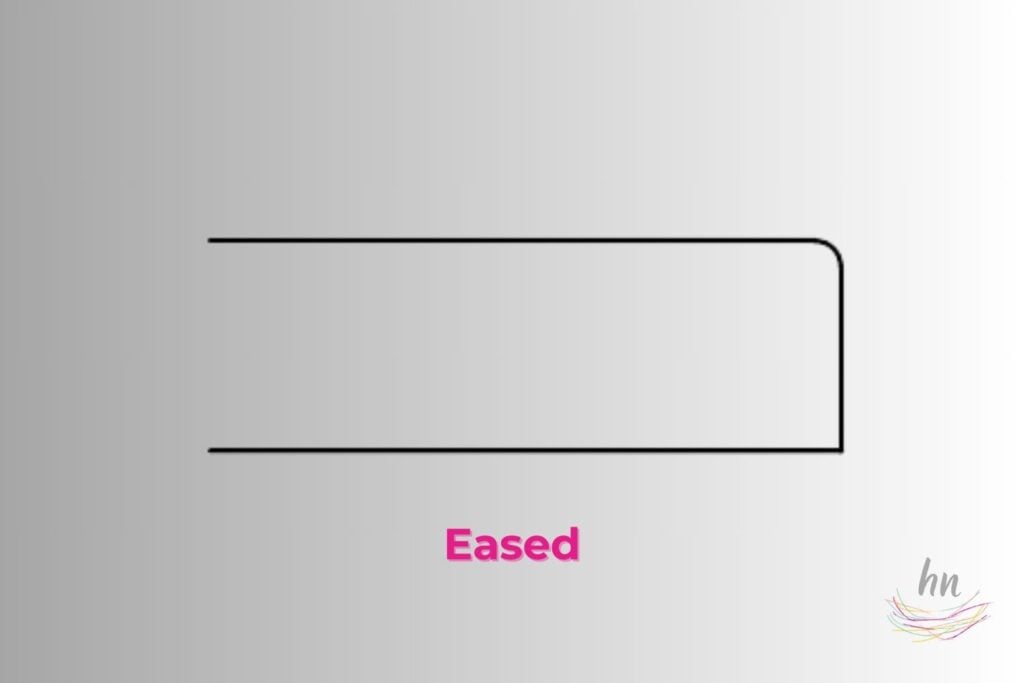
This simple, white kitchen from @robisonkitchenandhome showcases this common edge style well.
Square Edges
Classic, contemporary, and minimalistic best describe square edges. This countertop edge style is similar to eased edges but has sharper 90-degree angles for an edgier, more modern appearance.
Pros
- Sleek and striking appearance complements many kitchen designs – especially modern and rustic kitchens.
- Work with any countertop material.
- Pair with any cabinet design.
- Versatile and affordable option.
- Expertly highlights bolder countertop pattern choices.
Cons
- Ouch! Sharp, straight edges and corners may pose a safety hazard, especially in households with young children or elderly individuals.
- Not as chip-resistant as other countertop edges.
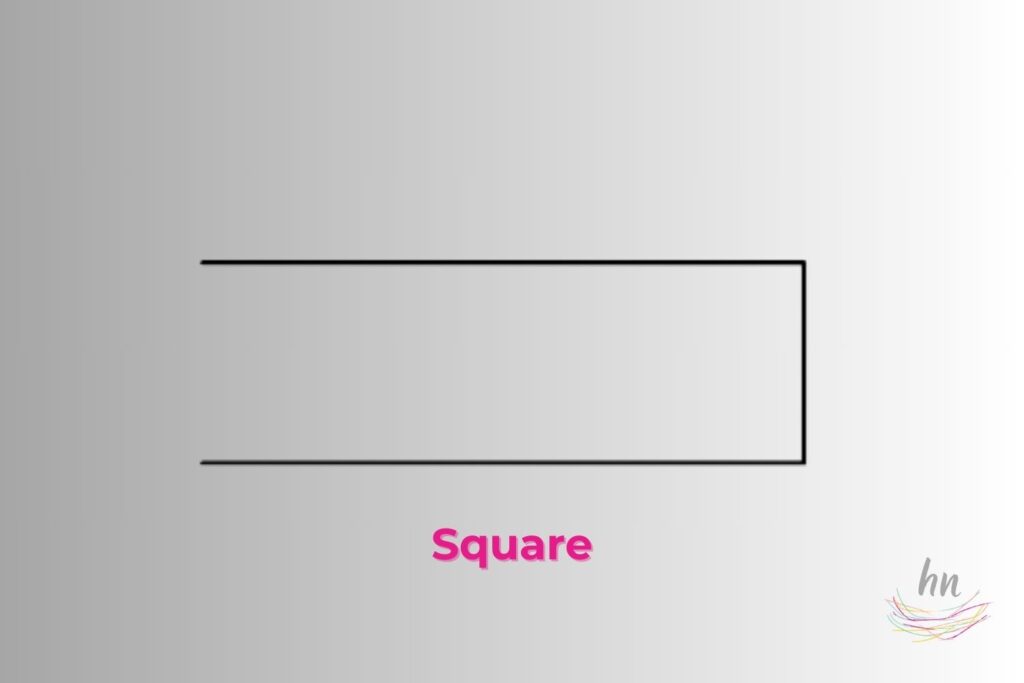
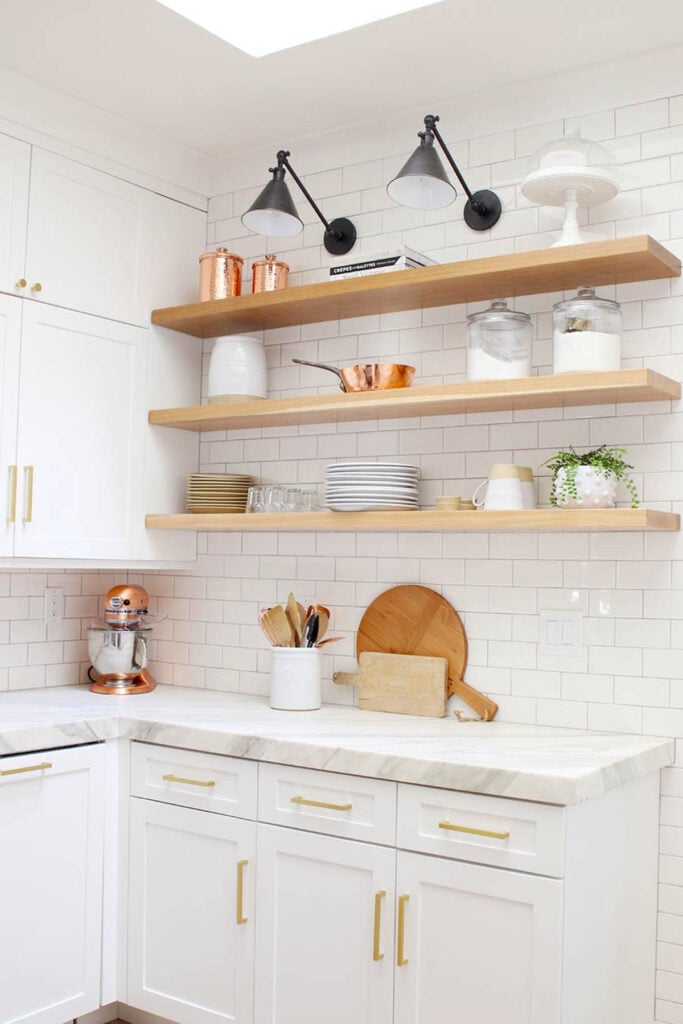
Take a gander at this gorgeous farmhouse kitchen from Modern Glam! The square edges on both the stone kitchen countertops and open wood shelving create a cohesive design.
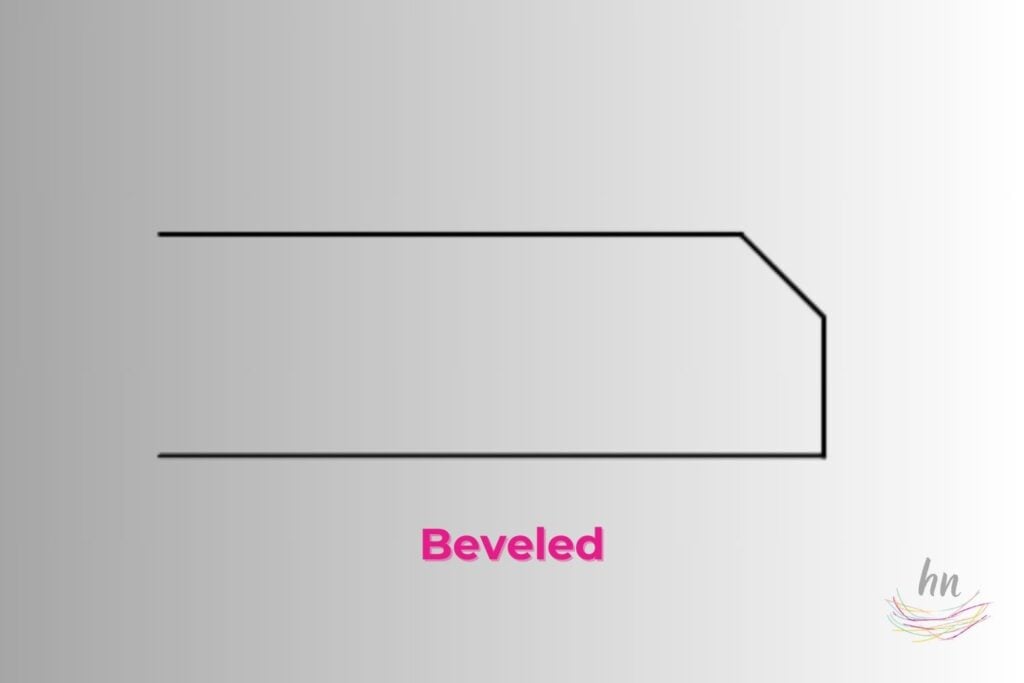
Beveled Edges
Beveled edges feature a flat, angular corner at the top edge that slopes downward at a 45-degree angle. Both single bevel and double bevel edges are options
This edge profile adds a touch of subtle elegance and, depending on the material, can make a kitchen look classic and traditional or sophisticated.
Pros
- Stylish appearance without being overly ornate.
- Ideal for most kitchen styles.
- Spills are easier to clean and won’t ruin your cabinets, thanks to the flat profile.
- Distinctive from other styles.
- Look amazing with stone materials.
Cons
- Bottom edges are sharp and can injure small children who run into them.
Select Surfaces in Minnesota highlights a strong beveled edge in this Instagram video. Not all beveled edges are this dramatic. They can be more subtle. But I thought this was a great example to highlight this particular profile.
Ogee Edges
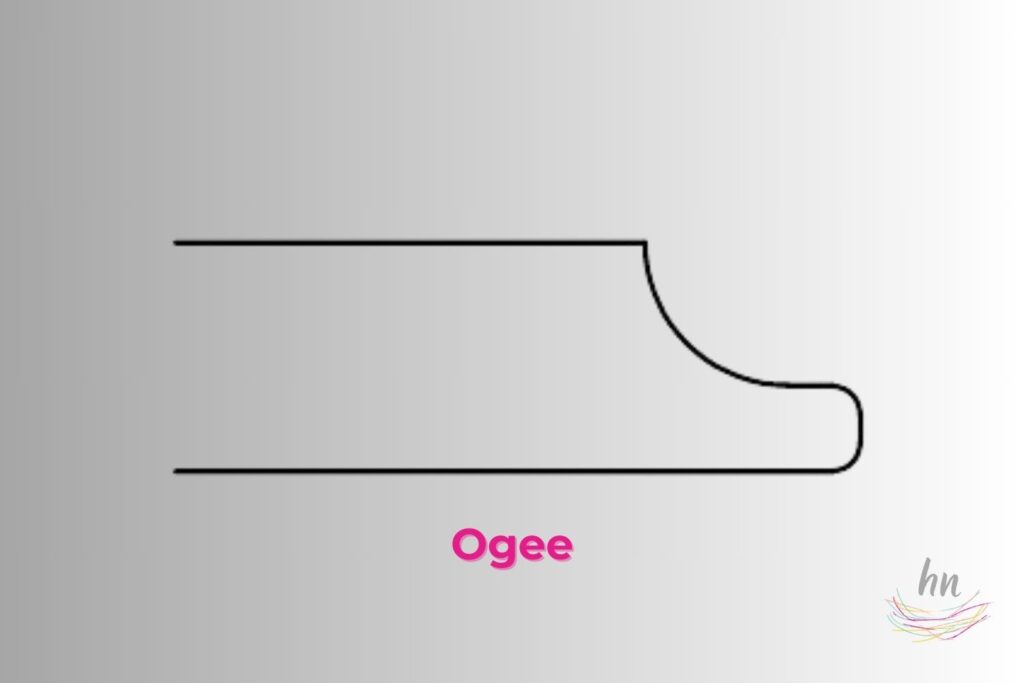
An ogee edge countertop is a more ornate option with a curved, S-shaped design that adds a touch of elegance and drama to the overall look of your kitchen (or bathroom).
Pros
- Provide a luxurious and sophisticated look that can elevate the overall appearance of your kitchen.
- Versatile and can be customized to fit various design preferences.
- Looks incredible kitchens with a traditional design.
- Gorgeous option for stone countertops.
Cons
- More expensive than simpler styles
- Require additional maintenance to keep them clean.
- Not suited for modern, rustic, or minimalist kitchen styles.
- Can be overpowering in small kitchens.
- It doesn’t work with many materials, especially laminate countertops, stainless steel, and butcher’s block.
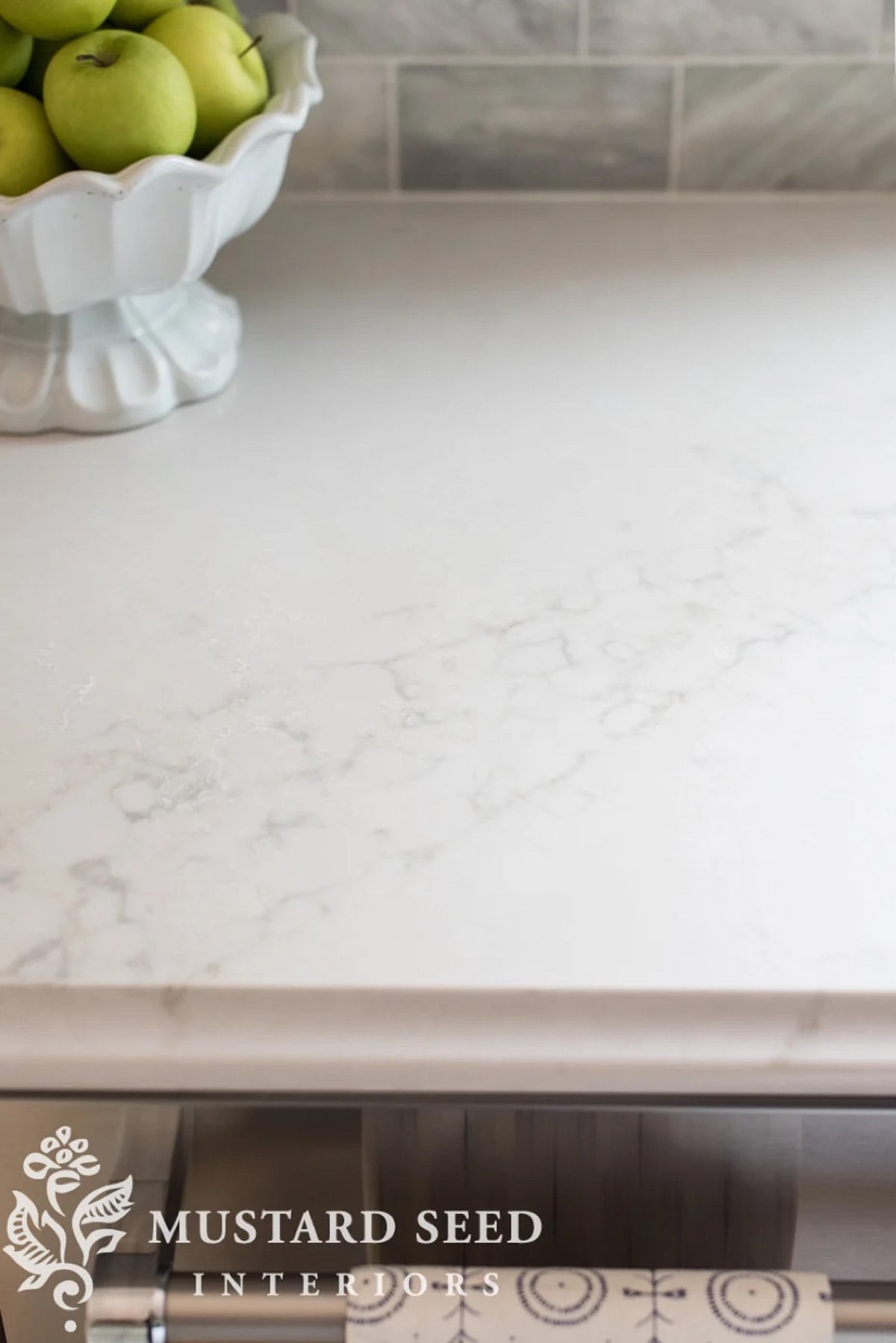
Mustard Seed Interiors chose an ogee edge for this gorgeous, but relatively simple, quartz countertop. It’s the perfect needed detail to finish this amazing kitchen redesign!
Bullnose Edges
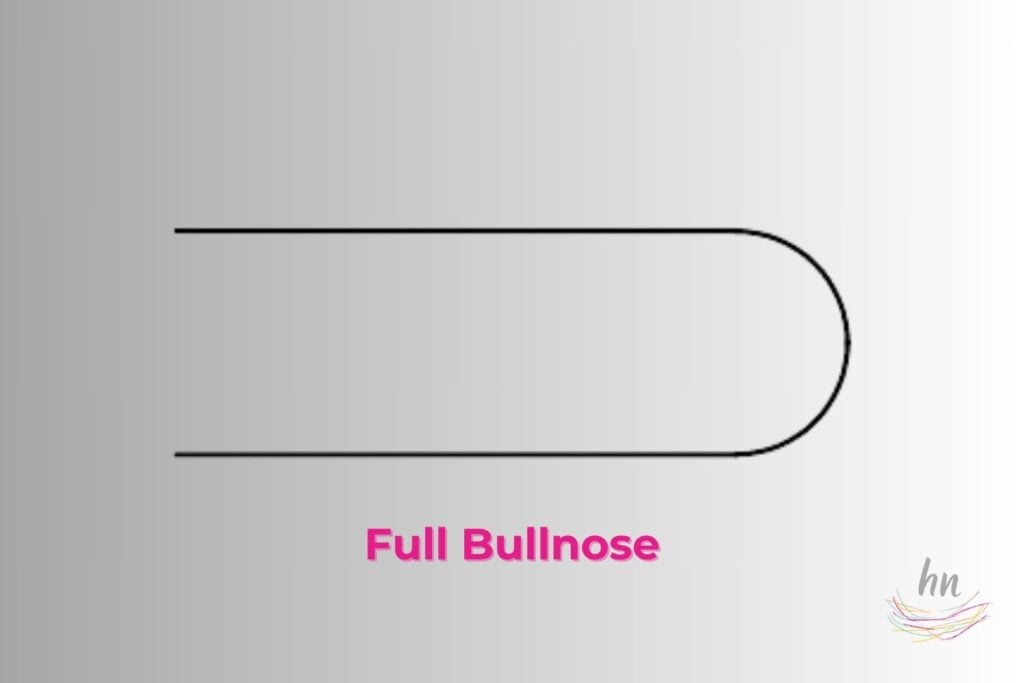
Bullnose edges are rounded edges that give countertops a soft, smooth appearance. They are a popular choice for kitchens with a more traditional or classic design.
Pros
- Timeless design that’s popular with granite countertops and other stone materials.
- Perfect for many kitchen styles.
- Rounded edges make them less likely to cause injury.
- Less prone to chipping and accidents than square edges.
Cons
- The edges aren’t easy to clean. If you try to wipe crumbs off and into your hand, they will probably go underneath the counter onto the floor.
- Spills are harder to clean up and more likely to seep into your cabinets.
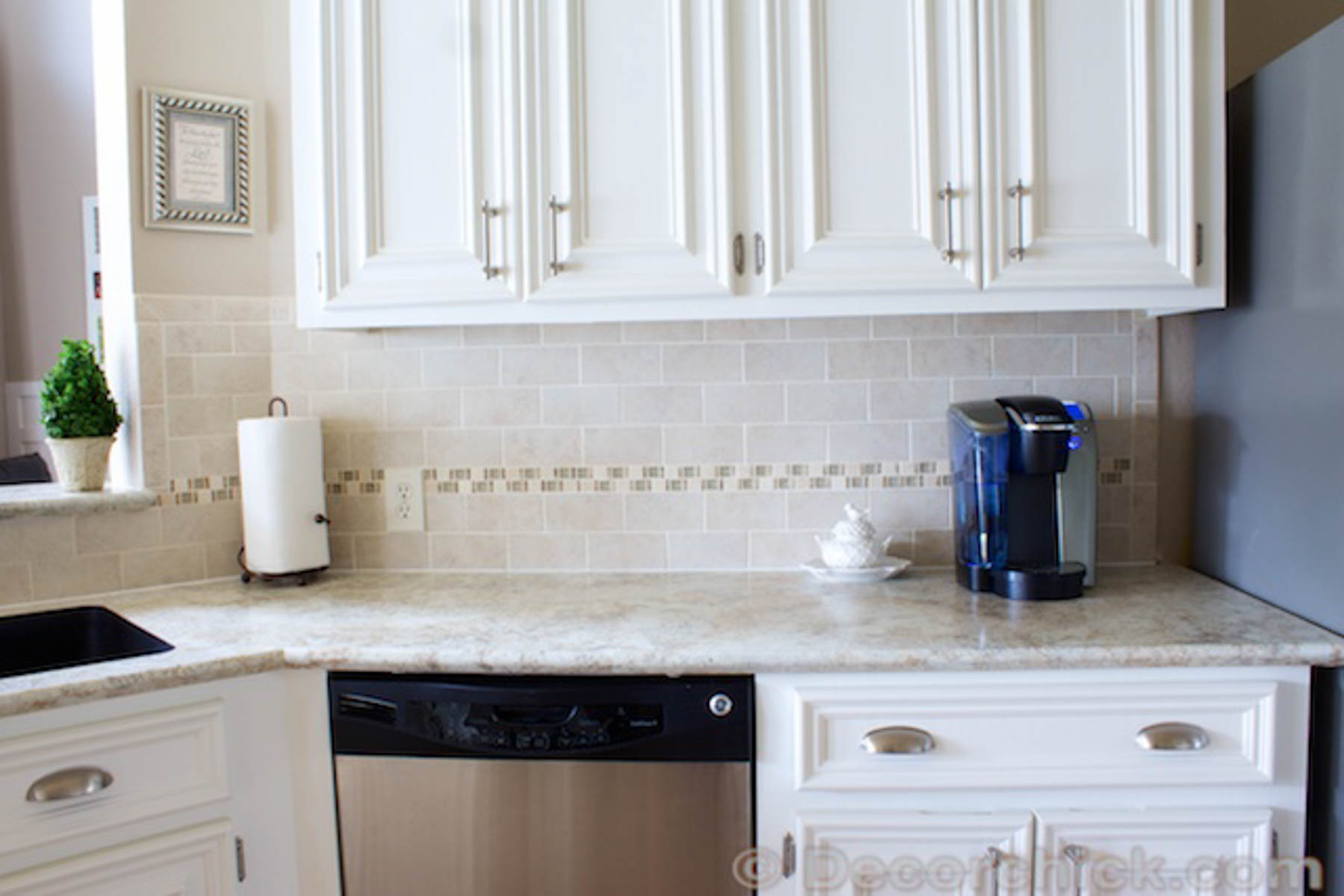
Decor Chick used a simple bullnose edge profile to offset the elaborate cabinets and beautiful backsplash. Love!
Half Bullnose Edges
Half bullnose edges are basically a combo of bullnose edge profile on top (with a more gentle curve) and square edge on bottom. This profile works well on flat surfaces and offers a versatile design.
Pros
- Half-bullnose edges work well for different kitchen styles.
- They are less prone to chipping.
- Good, affordable option.
- Spills are easy to clean up.
- Great edge profile option for any kitchen style.
Cons
- The design may not be as striking as other, more intricate edge profiles.
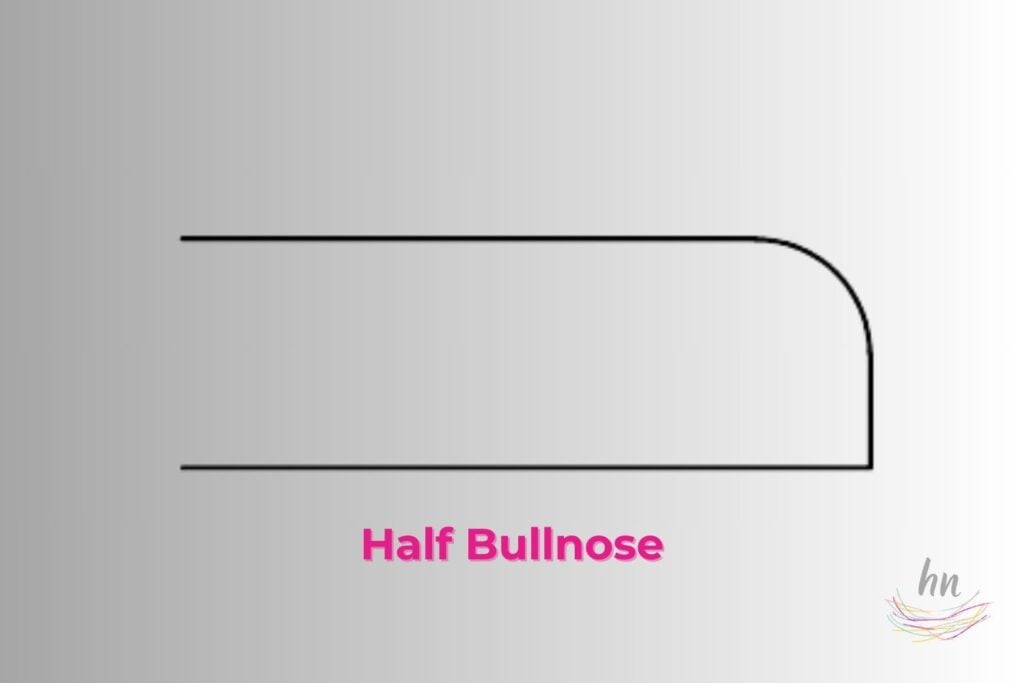
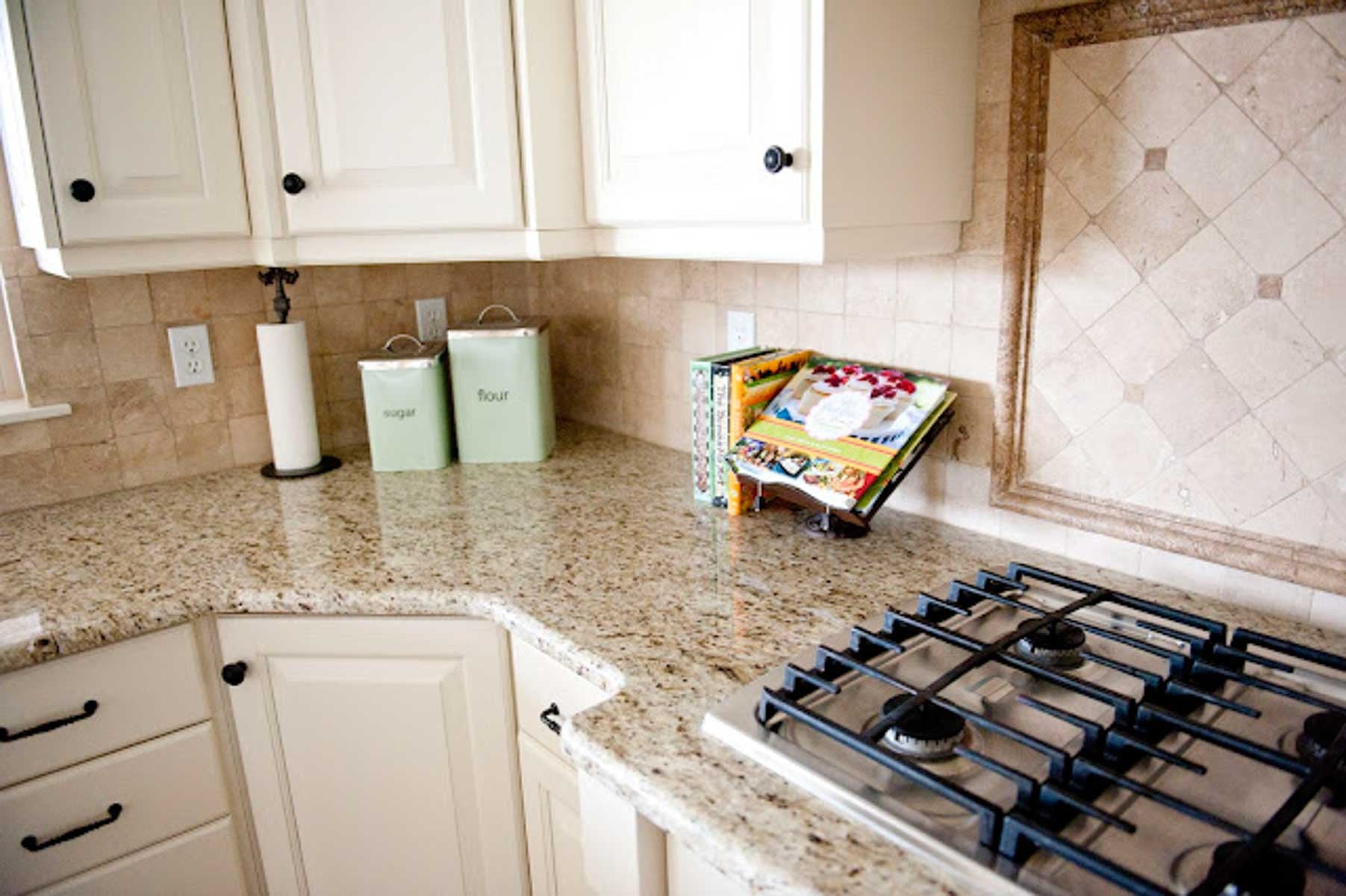
Sita Montgomery Interiors used a half-bullnose edge in this kitchen to give a soft, rounded edge that complements the other kitchen design elements.
Mitered and Waterfall Edges
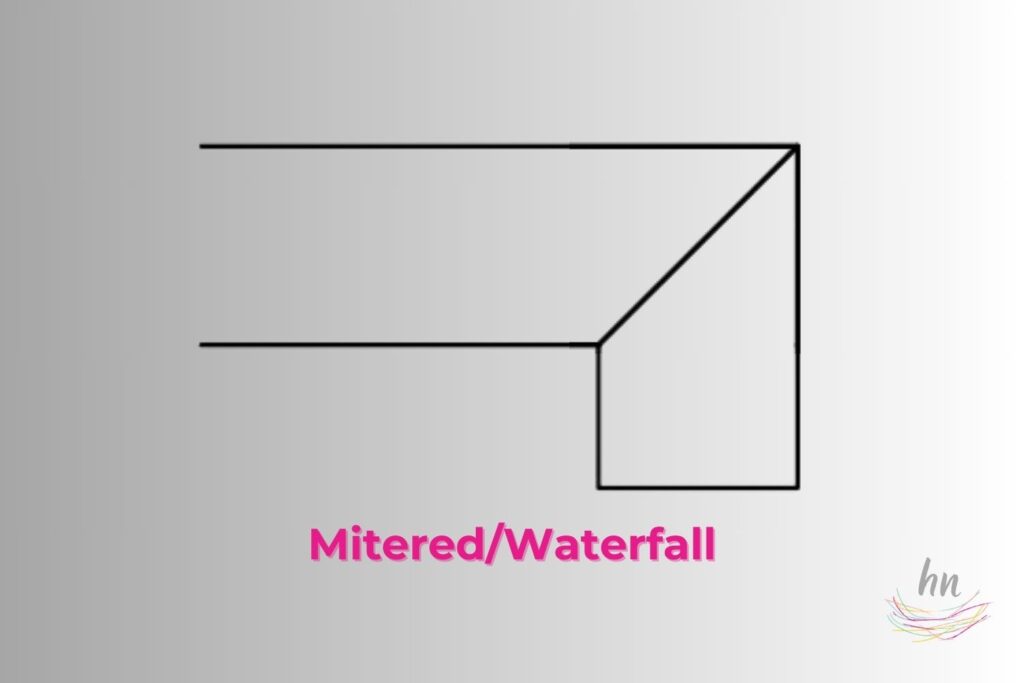
Curves galore! A mitered edge creates the appearance of thicker countertops by cutting a piece of stone (natural or manufactured) at a 45-degree angle, and then glueing the two 45° angled sections together to create a countertop edge.
Mitered edges can simply give the countertop the appearance of a thicker piece of stone/quartz…typically 2-3″, or, they can continue from the countertop surface to the floor, giving the appearance of a flowing countertop edge, AKA “waterfall edge”.
Pros
- Beautiful, dramatic, and eye-catching edge profile.
- Add a touch of luxury to contemporary kitchens and traditional kitchens alike.
- Great option for stone or manufactured countertops.
- Simple mitered edges that increase the depth of a countertop are a very timeless design choice.
Cons
- More expensive and complex compared to other countertop edge profiles.
- Because of the intricacy of the design, cleaning is more time-consuming (regarding waterfall option).
- May not be as suitable for rustic or minimalistic-style kitchens.
- Fabricator and homeowner must be watchful during fabrication that the veining seamlessly transitions from top to side of countertop
- Demands addition, so competes with other eye-catching design elements.
- Waterfall edge is trendy…so could end up looking more outdated at some point than more classic edge choices
In my own kitchen, we opted for a mitered edge on our quartz countertops. Quartz slabs are typically about 1″ in thickness, but a mitered edge can allow the counter to appear much deeper. We opted for a 3″ depth on ours.

When using a mitered or waterfall edge on a countertop material with veining, it’s really important to watch that the veining appears to seamlessly transition from the top surface to the sides.
This is not an easy feat for fabricators, and it can sometimes go awry…our fabricators had to redo our Cambria island countertop because of this. If you’re paying for the upgrade, you want to make sure you’re happy with the final product!

Kitchen islands are primarily where waterfall edges are seen. And it’s a great choice for those who love contemporary designs/a more modern kitchen style. @carriedmader‘s home is a perfect example of this elegant look.
A waterfall is a mitered style of edge that continues all the way from countertop level all the way to the floor.
Countertop Edge Designs Based on Kitchen Styles
Style and preferences matter when determining the appropriate countertop edge for your kitchen. Here’s a quick rundown of the ideal countertop edge profiles for various kitchen styles.
- Traditional: Nearly anything goes. Square, eased, beveled, ogee, and half-bullnose are top choices. More intricate profiles, such as waterfall and ogee variations, can work well too.
- Contemporary: The clean lines and minimalistic elements in kitchens striving for a modern look demands countertops that complement the other design elements without overpowering them. Square or mitered edges (including waterfall edges) are ideal choices.
- Rustic: These kitchens also revolve around simple, streamlined designs. Eased, square, and beveled edge countertops maintain those straight lines while adding understated elegance.
- Transitional: This design style bridges the gap between traditional and contemporary, making it ideal for something more eye-catching. Go simple with square, eased, and beveled. Or add sophistication with bullnose, half-bullnose, ogee, or waterfall edges.
Countertop Edge Types by Materials
Each countertop material has pros and cons and works better with certain edge profiles than others.
Laminate Countertop Edges
Laminate has come a LONG way since the days of ugly, cheap-looking counters and straight, square edges with that distinctive brown line at the seam.
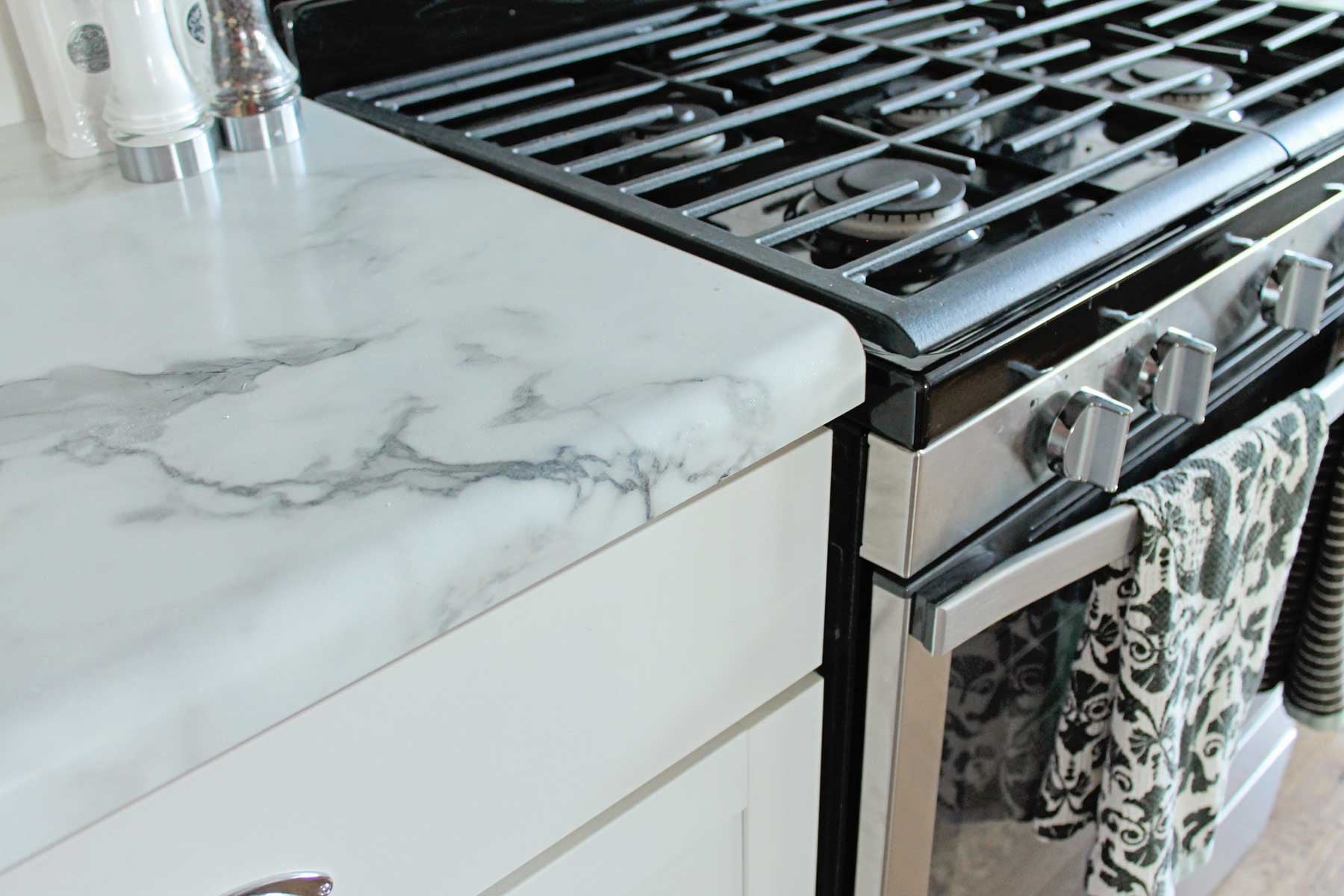
This type of countertop is available in hundreds of different designs, and you can even get different edge profiles glued on so that those seams practically disappear (and your counters look more like stone).
Check out this half-bullnose laminate countertop from Elizabeth Burns Design. No ugly brown seams!
Natural Stone Countertop Edges
Granite, marble, and soapstone are popular natural stone materials for countertops because they’re timeless, durable, and elegant.
Various edge profiles that work well with natural stone include eased, half bullnose, beveled, bullnose, and ogee edges.
Marble, in particular, looks incredible with more elaborate types of countertop edges such as ogee and waterfall styles.

Quartz Countertop Edges
Quartz countertops are an engineered stone product that combines the beauty of natural stone with the durability of an engineered material. This material often lacks the veining you find in natural stone and presents a more uniform appearance.
Eased, beveled, half-bullnose, bullnose, ogee and mitered edges are popular choices.

Solid Surface Countertop Edges
Many people often use the name Corian for these countertops because that was the first option on the market. These countertops strike a good middle ground between the depth and beauty of natural stone and the affordability of laminate.
Opt for square, eased, beveled, half-bullnose, and full bullnose edge profiles.
Butcher Block Countertop Edges
The natural wood of butcher block countertops demands simple lines to reflect the hardworking practicality of the material. Opt for simple, sturdy edge profiles, such as eased or half-bullnose styles.

Stainless Steel Countertop Edges
These industrial, sleek-looking countertops offer heat, water, and stain resistance that other materials just can’t beat. Edge styles for these countertops are typically eased, beveled, bullnose, or half-bullnose.
Concrete Countertop Edges
DIY concrete countertops offer unparalleled durability and versatility. They’re a unique and modern option for homeowners, with endless customization possibilities. You can use any standard edges or make something totally unique.
Pricing Guide for Different Types of Countertop Edges
Anyone who has done any level of home remodeling knows that the budget is always the final (and often painful) deciding factor for any elements you want to incorporate into your design!
Pricing for countertop edges varies significantly based on your material choice, the difficulty of the design, and the popularity of the edge profile.
Since there are so many variables that influence the price of your countertops, the best pricing guidance I can offer is to break these different types of countertop edges down into general groups:
- Most affordable: Eased, square, beveled, half-bullnose
- Mid-range: Ogee, bullnose
- Most expensive: Intricate ogee variations, mitered, waterfall
Tips for Choosing the Right Countertop Edge for Your Kitchen
Choosing countertop edges in order to create your dream kitchen involves considering factors such as design styles, budget, functionality, lifestyle, and personal taste.
Use these essential tips to help you make the right decision:
- Think about how the edge type will work with the overall design of the room and the materials used in the countertop.
- Consider how the countertop edge will fit into your lifestyle. Rounded styles, such as bullnose, can be safer for households with small children. Or if you cook a lot and don’t want to spend all your time cleaning, a simple design like an eased or squared edge can be an ideal fit.
- If you want a more intricate edge profile, you’ll need a thicker slab. That will cost more money and require more cabinet support for the extra weight.
- Don’t force elements to compete for attention! Instead, bring them together seamlessly. If you have ornate cabinets or an eye-catching backsplash, opt for a simple countertop edge.
- Quartz and natural stone materials can chip along fragile square edges. Rounded profiles, such as eased edges, help reduce the risk of damage.
- Decorative countertop edges are best in large spaces or as an accent within the space (e.g., the kitchen island) because they draw the eye and can make rooms feel smaller.
Although it may not seem like an important detail, your countertop edges WILL make a significant (and often unexpected) impact on your overall kitchen design. I hope this post helps you find the perfect edge profile for your beautiful kitchen remodel!
And once you’ve picked your perfect countertop edge…don’t forget to make sure you know the best way to clean your new countertop! If you’re going for quartz, we’ve got you covered in this article.

More Home Remodel Inspiration
On the hunt for more simple home improvement ideas, and DIY home decorating inspiration? Be sure to check out these articles, too!
- Staircase Remodel Project: How to Paint Stairs
- Cheap Bathroom Remodel (On a Budget of $0)
- 9 Insane DIY Bathroom Renovation Projects
- Bathroom Tile Paint (Bathroom Remodel Ideas on a Budget!)
- Subway Tile Patterns – A Guide
- $1000 DIY Kitchen Remodel
- How To Paint Wood Floors Without Sanding
- 12 Best Paint Colors For Sage Green Kitchen Cabinets
- 7 BEST White Kitchen Island Ideas and Inspiration
- 13 Best Black Kitchen Cabinet Paint Colors + Tips
Pin this project for later! And if you decide to try it, leave a comment on the pin! That helps others know whether they want to try it, too!
Pssst…before you go, I sure would love to hang out with you again really soon! Sign up now and get a no-cost copy of “Builder-Grade To Beautiful: 10 Totally Transformative Home Decorating Solutions, All Under $100!” Click here to enter your email or on the image below. Your copy will be emailed right away!




Leave a Reply